|
|||||||||||||||||||||||||||

|
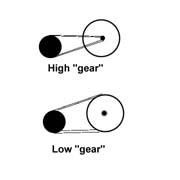
Belts Belts are an important part of the drive train on a snowmobile, but what do you really know about them? They are round, have fibers in them, and they cost about $80. . . There is a little more to it. The belt can seriously effect the performance of your snowmobile if it is too long or short, too grabby or too smooth, or just worn down. One of the reasons that they cost so much is how exacting the specifications are. If it is just a little too long or short, it throws off the whole drive system. The same goes if it has worn narrower than original size, or become glazed. belt companies spend millions getting the right 'grabbyness' out of a rubber compound. Use the dealer belt. Really, it is light years better most of the time. Personally, I recommend replacing your belt annually, for what is considered average, about every 1200-1500 miles. If you ride a high HP sled, it should be done much sooner. When I smoked a belt last year, it really reminded me of how important it was. I knew that the belt was worn (800 miles~), but did not really associate it with the reduced performance of my sled. I had noticed that it was not as snappy out of the hole, and did not carry the skis as far or as high as it used to. When I changed the belt, it was just like the good old days, nice and snappy. It really matters. In my case, the belt had three things wrong. It was stretched longer than stock, increasing the effective gear ratio of the clutch set, sort of starting out in a higher gear. It had also worn narrower than original, also throwing off the clutch tuning. Finally, it had glazed and become slippery, making power transfer much less efficient.
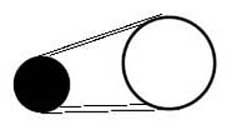
There are two things to look at here, belt width, and belt deflection. The belt width is simple. Compare the width of the old belt to a new one. It should not be much different, or the old belt is worn, and will make a good spare. Very little wear is permitted here. Belt deflection is an important adjustment. It establishes the effective length of the belt, and makes sure it is set to the optimum gear ratio.
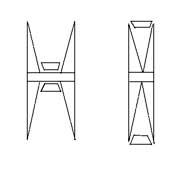
The way to measure and adjust this varies by brand and model year. They all need it, just the how and how much are different. Most companies have a gauge to measure this, but often a ruler will do. It should be well discussed in your service manual. The way to adjust this is to change the amount that the secondary sheaves are spread. If there is too much deflection, you need to narrow the sheaves to get the belt to ride higher in the pulley and take up the slack. In the olden days, we had to pull apart the secondary clutch and remove spacers. Now, there is a dial mechanism on the secondary of most modern sleds that make this a 5 minute adjustment. Most of the time, a new belt will put this right back to spec, but it still changes with the wear of the helix and the bumpers that run against it. Yes your sled will still run with a worn belt or an out of adjustment clutch system. It will run better with a fresh belt and a properly adjusted belt deflection. It doesn't make much sense to spend 5-600 bucks on pipes to get 12 more ponies, then give up more than that on a worn $80 belt. Tune to win.
Clutch Tuning
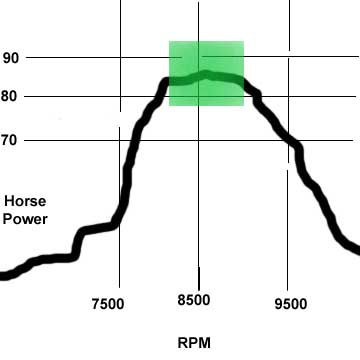
This not only works for modified sleds, but can really help the out of the box sleds. They set them up to averages at the factory, and you might not have the most power your engine can make. For those that buy pipes and carbs and stuff like that, it is a must. Too often, catalog pipes actually make your sled run worse if you don't set up the clutch. Usually the pipes increase the peak horsepower rpm to about 9000 or 9300. If you are running at 8000 with your peak horsepower being made at 9300, you just paid 600 bucks to loose 20 hp. You gotta tune to win. Dyno it. Period. |
 |